Japan Trip 10 of 10: More As Seen on TV

Check out my first post about some places we visited in Japan that you can check out in better-filmed things on TV or online.

Sushi Yasuda

It was like teleporting into the Parts Unknown segment. The restaurant looks the same as when it was filmed. Yasuda say he misses New York, where he lived for 27 years. He misses walking around the city and still loves his annual visits. Also, he’s very happy to take pictures flexing with customers.

Nishiki Market —Mind of a Chef

David Chang described it as one of his favorite places in the world. There’s a lot to see. (Though you can also see the end of a different journey at a sushi counter at any high end restaurant in many cities.) Nearby Pontocho alley was great too.

Tsukiji Market — Jiro Dreams of Sushi and like every food show with a Tokyo episode

I have a separate post with more about Tsukiji Market. We did go to the market but we didn’t get into the auction. One of my favorite places on the trip.

A bento box on a bullet train — A Cook’s Tour

Train stations have all sorts of food. On the way to Kyoto we saw a couple businessmen with bento boxes full of seafood. On the way back we made sure to pick up some boxes of our own. We tried a beef cutlet sandwich and a beef bowl.

Then I tried checking the train speed with Snapchat’s mph filter. The highest we hit was 171 mph.

James Altucher podcast: Gary Gulman and better, same, and worse

Gary Gulman was a guest on James Altucher’s podcast. I’ve seen him at the Comedy Cellar a couple times and really enjoyed his sets. In the most recent set I saw, he talks about a Netflix documentary about the team that came up with the postal code abbreviations for each state. He goes into great great detail of mundane things. I like it1.

James mentions a concept he heard about picking people in your field. Have someone around that’s better than you, have someone around that’s the same as you, and have someone around that’s worse than you. (At that certain skill, not as a human being.) Gary Gulman finds it interesting and says it sounds about right. He has a lot of comedians he looks up to and then the ones about the same to be depressed together with.

In my life, I’ve seen the importance of each of these sets of people2.

I’ve had cases where I’ve been around people that were much better developers than I was3. It was inspiring and a great way to know what’s possible. It’s that idea that nobody was running 4-minute miles and thought only like gazelles could do it. Then Robert Bannister broke that barrier and a bunch of other people broke it the following year, knowing it was possible. Having people around that will show you what you can do is important.

Right now I’m helping a friend learn web development. On the feel-good side, it’s rewarding to see that I’m really, actually able to help someone. It’s nice to be able to answer questions and know he’s thankful for it. And then it’s super rewarding seeing him update his site on his own with a little JavaScript that I know he’s learning on his own. On the practical side, it gives me empathy for a beginning developer which is valuable since I design developer tools. And it helps me solidify my knowledge.

Senior year in EE, I was in a class that was half undergrads and half grad students. One of the grad students was named Ram and he made everything seem easy. He’d get stuck on figuring out some value for IC layouts. Stuck in the sense of someone spilling a can of soda and not really cleaning it up properly and then you step in that spot and need a little extra mustard when lifting your foot up then you’re done with it. Ram would pause, open his post-it flagged textbook exactly to the spot, do the hand motion indicating speed reading, nod, and then continue, no longer stuck.

I would then stay at the computer lab for 3 more hours working on the same problem. It’s great to have people around the same skill level because you can complain together about how Ram is fucking up the curve and we can’t compete with someone named after a computer component.

  1. Something I don’t like: I’m writing on a flight and we just hit turbulence and the attendant started speaking super freaking fast. You gotta put the slower speakers on this thing.

  2. In trying to improve as a writer, I don’t really know many writers. I’m not surrounded by them. I know of writers that are better than me. But not really any that are the same or worse.

  3. At work, I’m surrounded by extremely bright people. Every day can feel like imposter syndrome at its highest level. There are a lot of people saying everyone has imposter syndrome. Even Barack Obama. I like that people are talking about it more, but I don’t think everyone successful has it. I’ve definitely met very smart people who knew it through and through pretty much to the core. I don’t think Brock Lesnar ever thinks “I don’t belong here”. Masters of Doom talks about John Carmack recognizing that John Romero was a better programmer and wanted to learn from him. But it doesn’t sound like he didn’t think he belonged. Ok, so my two examples are 1.) a former UFC and WWE champion and 2.) one of the most influential programmers ever who can present on stage for an hour without moving his feet. I don’t have a point anymore.

Japan Trip 09 of 10: Tsukiji Market

“Too late.”

Auction

Huh? It was 3am, it couldn’t be too late.

“Fish? Fish market? It’s too late.”

I guess it was too late. We didn’t get into the tuna auction. That’s one thing. 3:15 wasn’t early enough. Not even close to early enough. That might be because the market is closing and moving so people are really trying to visit in its current location. Still, there’s a ton to see later in the morning. Or when morning starts, because 3:15am is still the middle of the night to me. That’s the kind of time when I wake up and think about all the spooky things about 3am and then go back to sleep.

We thought about going the following night, but there was always the chance that we wouldn’t get in again. Planning around something where you have to wake up at 1:30am and actually head out can really put a wrench in a schedule1. We decided not to go.

Outer market

There’s an outer market with plenty to see. I think if you plopped the outside market somewhere else in Tokyo or any other city in the world, it’d get a good amount of traffic. I bet the more oblivious visitors have no idea there’s an inner market, because this was cool to see on its own. Lots of vendors. Meaning lots of different things to eat.

The first thing we tried was grilled scallop. We walked into the market and saw a woman grilling skewers with scallop topped with sea urchin. The contrast in texture is nice. Though uni probably contrasts with everything that’s not a sauce texture-wise.

Some kind of squid roll with cheese inside: I mean, if you like squid and you like cheese this is going to be a hit.

Mochi stuffed with various fruits: Not exactly a seafood market exclusive but still good for my mochi craving. I went with strawberry.

I went back to get another one of the scallop and uni things. on the way there we saw a couple people doing something where there was a crab shell with a scallop with an oyster with fish roe and also crab miso2. they take all of that and then they blow torch it.

Tamago on a stick: I wish I tried this. I don’t know if that’s really what they refer to it as. but there was definitely a long line for this. When we walked by it we were on our way out and, more importantly, stuffed to the brim.

The actual market

We figured out that the actual market is past a gate. It looks shrunken aircraft hanger, especially with all the different vehicles moving around. In the somewhat open lot in front of the market, scooters go by you in all directions. Then there are these things that look like a person is standing and steering a keg. Like a flatbed keg. You gotta stay alert.

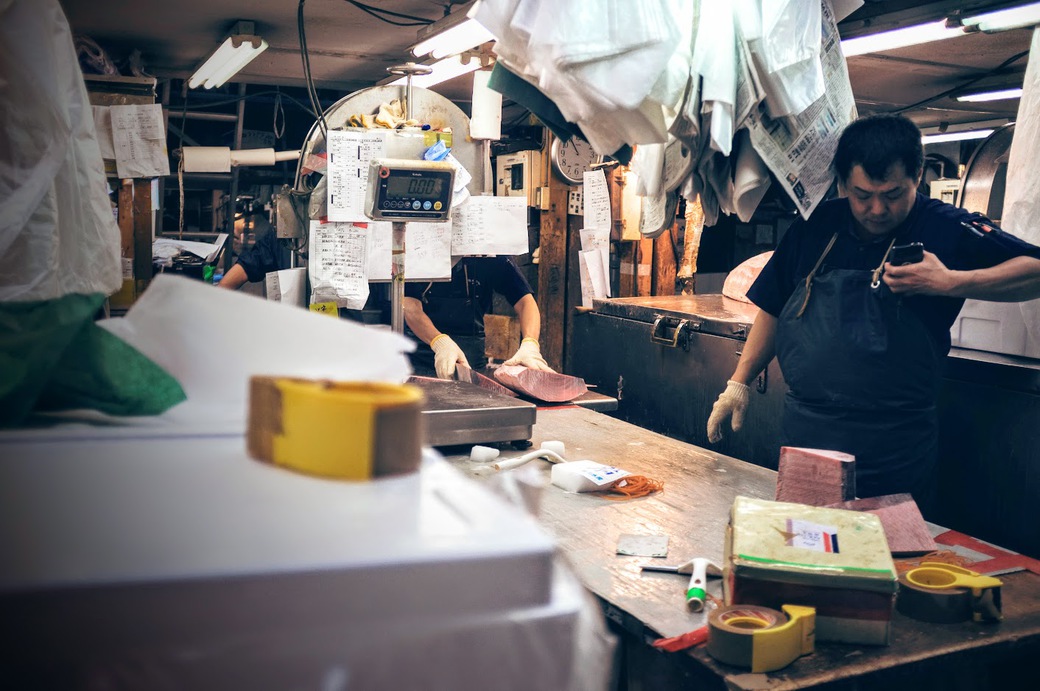
With it being such a tourist hot spot, it’s easy to forget that so many people are actually working. The inner market still functions as a place for professionals to buy fish more than a place for tourists to buy their souvenirs.

Right outside the hangar, type building (but still inside the gate), there are about half a dozen long buildings and each of them has probably 8 restaurants and almost all of these serve sushi. Almost exclusively between 6am and Noon. Breakfast sushi.

You could spend a few mornings here no problem. Especially if you enjoy photography. Everything is photogenic.

I’ve seen pictures of the tuna and read how much they weigh and thought I had a good sense of their size. Walking around, I saw pretty big chunks being cut up and was starting to get a better sense of scale. Then I almost bumped into a tuna head on the ground and thought I was seeing some kind of mistake. The thing was huge. Its body probably was being cut into huge blocks and then into medium blocks then smaller all the way down to a small slice sitting on a ball of rice.

Walking around was like seeing one of your omakase meals getting it scaled up to Costco size. Along with the tuna, your single slice of geoduck turns into a seafood sausage shop. That piece of uni turns into rows and rows in a big wooden box that seemingly retires as a pencil container at Muji. That mussel gets some HGH (as muscles are wont to do) and turns into a shell bigger than my head. Then there are crabs of all sizes with all sorts of shell patterns I’ve never seen. Your plate of grilled squid has been enlarged to cover a dining table.

It was too late to get into the auction but just in time to see something incredible.

  1. Plus the auction is supposedly twenty minutes. I realize that if I got in I’d probably say, “Best 20 minutes ever.” I’m being a hater.

  2. Crab miso has nothing to do with miso soup. It’s crab fat or crab innards or crab mustard or crab guts. Whatever you prefer to call it all I care about is that I prefer eating it. Just about perfect.

Japan Trip 08 of 10: Rico! Osprey!

Ever since we booked tickets to Japan, I wanted to go to a New Japan Pro Wrestling (NJPW) show. In the past year, I’ve slowly, somehow gotten back into wrestling1. It was a pretty big part of my childhood. The extent of my knowledge is that AJ Styles and Shinsuke Nakamura are from NJPW. And that they’re closer to NXT shows size-wise than they are WWE shows. I’ve wanted to go to an NXT show so this would be close.

Getting tickets was a more complicated than expected. The expectation being you go to, say, Ticketmaster Japan and order with like 8 clicks. Not quite. After giving up on the machine at the convenience store, we asked a hotel attendant if he knew anything about tickets for the show. When or where it was. He made some calls, wrote things down, wrote them down again phonetically, and explained that we’d need to go to the box office. Early.

I’m not entirely sure how ingrained in Japanese culture pro wrestling is. Before leaving, we asked the hotel attendant if he was familiar with NJPW, and he replied about the same as you might expect a friendly hotel attendant in America to: I know some characters because my friends watch.

After getting to Tokyo Stadium2, we saw a gigantic gigantic line. Like hundreds of people long. For a second I thought that was for the wrestling show. Then I remembered it was a wrestling show and knew that definitely wasn’t the line. (It was for a Giants/Tigers game — think Yankees/Red Sox.)

The Tokyo Dome reminds me of an old Hulk Hogan video tape that we had with some of his matches. I won’t even say it was the best of compilation. Because if it has a match with Hulk Hogan and Stan Hansen in Tokyo then I can think of five bigger leg drops without much thought. but it always gave me the impression that wrestling was huge in Japan.

2000-seat Korakuen Hall is great venue. The only other wrestling show I’ve been to is Monday Night Raw, which was in the 18,000 seat Honda Center. Korakuen Hall is the size of a large high school gym. I understand why people say NXT shows feel so cool because of the small venues.

I was surprised how… normal everybody looked in the crowd. A couple guys in suits. It’s not still real to them.

Characters

I knew the Bullet Club was some kind of nWo-type faction with better shirts. I didn’t expect them to be a bunch of cowards. Pretty much doing a good job being heels. I can picture AJ Styles there. He’s the right size and it’s pretty apparent what people mean when they say Vince McMahon is a body guy. NJPW doesn’t have as many guys with that kind of body type.

The matches

There were a couple of matches involving 8 to 10 people. Good matches usually aren’t composed of random people put together as teams. These weren’t good matches, But I was happy to see all the different characters. Wrestling is different in Japan but heels are heels and the baby faces are baby faces and it was pretty clear who’s who.

There weren’t many promos being cut and there wasn’t much story progression. From what I gather could gather, most of the matches were part of an ongoing tournament, sort of like King of the Ring.

The match

Ricochet and Will Ospreay wrestled and it was the highlight of the night. They brought the house down. Meaning the crowd clapped vigorously. I mistakenly thought this kind of match was routine for NJPW main events.

Afterward, I was trying to find highlights from the match and started to the tweets and articles about how great the match was. Later followed by former wrestlers arguing amongst each other about whether it was a good match or not. My two cents: it was awesome3. I’m a casual fan. My girlfriend is the girlfriend of a casual fan, meaning she watches more wrestling than anyone probably should. It was one of the highlights of the trip.

  1. I’d say it was a pretty major part of my childhood. Pre-Monday Night Wars, I thought it was real. I was into it through the Monday Night Wars and slowly stopped watching. In the ticket office line, we happened to be standing in front of another group from New York. One of them had just about the same story: they’ve gotten back into wrestling in the past year or so and came because it’s supposed to be like an NXT event. There must be dozens of us.

  2. The area around the Tokyo Dome was pretty cool also. It was sort of an amusement park and mall mashed together.

  3. Especially when a guy about ten rows back yelled, “THIS IS AWESOME.” and got the chant going. He was absolutely right.

Japan Trip 07 of 10: Cheap eats

Beef bowls at Matsuya and Sukiya

I was looking for a beef bowl. And I knew that Yoshinoya was available in California so I didn’t want to get that. (Similar reason for not going to an Ippudo.) We had just finished at Nishiki Market and getting some yakitori in Pontocho Alley. We wanted a little bit more food so we wandered around trying to find shaved ice. We had a place in mind but didn’t have our compasses straight so we got turned around a few times. And we realized we still wanted something savory. That’s when we ran into a Matsuya.

It doesn’t have english signage like you’d find at Yoshinoya or Sukiya. You order from a vending machine. All these places have beef bowls, but it seems like the other choices are where things get different. Matsuya had Dan Dan Noodles on the menu. I’ve had cheap Dan Dan noodles before that weren’t great. These weren’t that. These noodles were delicious. It’s one of my favorite dishes because my parents call my brother Dan Dan.

Takoyaki at various places

Takoyaki are octopus balls. They seem to be served super hot. In most cases, you order them either at an outdoor stand or through a store window. We tried them in Akihabara, Osaka, and in Tokyo. They’re not deep fried but that might be amazing. Instead, they start with a griddle with a bunch of golf ball sized holes1. They drop a few cubed pieces of octopus in and then fill it with batter. Then they just go down each column turning the balls until they’re cooked through.

It’s covered with sauce and bonito flakes.

Curry at CoCo Curry

We had curry a few times. They’re all over the place. And plates of curry with pork or chicken cutlets are only 600 or 700 yen. It’s great. I really love curry. Major comfort food vibes. I think I’ve said that I could eat curry every day in the past. I had it probably three times in a week and have changed my mind. I still love the stuff. But it’s so heavy. I had it on the plane and one morning in Tokyo before heading to Muji (which was huge and I’d also like to write about in some way).

This curry was better than what we got on the plane. I can get about the same in New York, but for a few more dollars. That’s how I felt about a lot of the cheaper eats. If you’re sticking to the main portion of the menu, you can get something similar in America for a little more money.

Mister Donut

Oh boy. My friend recommended Mister Donut. It was one of the places we seeked out on the first morning. Then it was available in Kyoto Station and we dropped by every day. Then the streak became a thing and there was one near our second Tokyo hotel so we kept going. There were still plenty of donuts with green or in shapes that didn’t seem like things we’d see in America so we kept going.

Their signature donut is this thing that looks like it could be one of Akuma’s bracelets. The normal one is glazed or frosted. The real champ here is the matcha one where each sphere is cream-filled.

There were matcha cake donuts half dipped in chocolate. And chocolate cake donuts with some kind of matcha glaze.

There was a round donut but instead of being jelly-filled, it had red bean, some kind of matcha2 cream, and a small square of mochi. I hope they call it Mister’s Matcha Mochi.

There was a French cruller half-dipped in chocolate that I couldn’t get enough of3.

  1. Somewhere, there’s a manufacturing belt with a bunch of molds in it then that belt turns reaches a fork and the molds go on separate tracks. One gets filled with molten iron and then other gets dimpled then the tracks come back together onto the same belt where they’re eventually sprayed alternately “golf ball molds” and “takoyaki griddles”.

  2. For all these matcha-optioned donuts, there was no matcha latte. That said, having I really enjoyed having an iced cafe au lait with all the matcha flavored donuts.

  3. As I’m writing more, I’m getting a better sense of when a footnote seems appropriate. I don’t currently have the posts dated. And if I’m writing something very time specific, then it might be better in a footnote. For instance: I’m currently writing this on a plane. And I bought a cruller at Dunkin’ Donuts in the airport before this flight but it just wasn’t the same. Now, I’m not giving up completely, because the flavor was there. It was missing the crisp outside and soft inside. I think this might have had more to do with the ‘in the airport’ part of that sentence rather than the ‘Dunkin Donuts’ part of that sentence.

Japan Trip 06 of 10: Five more thoughts

Here are some more thoughts on my trip to Japan.

I didn’t know the language: I thought this was going to cause more issues than it actually did. Especially not being able to read anything. There are enough English subtitles on the more important portions to make things manageable. Plenty of restaurants have english menus — many more have pictures you can use when ordering. At the Tsukiji gate, I was able to just type things into my phone to ask what time to come back the next day. And at a yakitori place I was able to ask if beef tongue was available.

NJPW show: Never would’ve guessed that’s what we were walking into. They basically express their excitement through how quickly they clap. And then you’ll hear a lot of accented “Rico!” and “Ospreay!” scattered throughout. It was a little bit of work trying to figure out how to get tickets. There are guides online saying you can just get them at a convenience store. Using these without reading Japanese is pretty hard. Or maybe I gave up too quickly. As far as I could tell, there was an option for viewing the help tutorial in English but no option to use the search and ordering interface in English.

We chatted with one of the attendants at the hotel and he made some calls to explain things. Go to Tokyo Stadium and there will be tickets at the box office. It opens at 4pm but there will be a line so get there earlier. Somehow, this all actually worked. It seemed like people reserved their spots in line with newspaper or something. But there were plenty of tickets to go around.

Fushiri Inari temple: I went with my parents to the Grand Canyon before. I had seen photos of the Grand Canyon before. You hear “pictures don’t capture it” for a lot of things, but rarely do things live up to that. The Grand Canyon did. I’ve never felt that kind of impact from just looking out at something.The torii gates at Fushiri Inari felt similar. But I guess at a different scale. Or I’m not sure what the word is to describe the difference in feeling. Walking through it felt like nothing I’ve experienced before. There are a lot of gates.

Arcades and crane games: I think we spent around $60 total in various crane games with nothing to show for it. Something I hadn’t seen was the style of crane game where there’s one big item to win. I learned you can’t really plan to win this with one go. You put the 500 yen in and get a 6th try free, and then you try planning different moves to eventually get that one item.There was also this sick setup of my life in 3rd grade.

What you can learn about UX from bidet UIs

I ordered a Chromebook — first impressions

I’m not sure what it was that really triggered things but I ordered a Chromebook last night1. I’ve wanted a lighter laptop for a while. My main (well, only) personal computer is a 15” MacBook Pro. I’ve had it for about three years now. It’s portable. I’ve traveled with it. I’ve used it to write in coffee shops.

It’s not super portable, though. I think twice before taking it anywhere. I have the same laptop at work and have brought both to travel before. That was a little ridiculous to carry in a backpack.

I’m thinking a Chromebook will feel better. The MacBook feels big sitting on an airplane tray. I was thinking right now that anything that might help me establish a writing routine will be worth the investment. Also I had some Amazon credit2.

Anything to help me focus3. This goal to write 100 somewhat-daily posts is becoming more serious as I’m starting to get a little bit of momentum.

One of the biggest distractions when putting posts together is the urge to tinker with the blog. As in writing HTML/CSS. It’s a pretty modern distraction for writing. It wasn’t like you could alt+tab over in your typewriter to go adjust the final book binding and presentation.

Having separate computers for writing and for editing/polishing and doing HTML/CSS things might be overkill. But I think it’s worth a shot. That’s why I ordered a Chromebook.

First impressions after about 15 minutes of use4

  • I like it. I think it’s going to be exactly what I wanted it to be: a writing machine. Which happens to be what I want to become.

  • Happy to see that developer tools work and I can do some JavaScript in the console. I’m not sure why I thought it might not work.

  • I don’t have plans to load Linux on this or anything. I can see why it might eventually be tempting/helpful for when want to make some HTML/CSS updates and finish off posts5.

  • On the other side, I’ll have the itch to figure out how I can do some development straight in ChromeOS. I think that will involve either a web IDE like Cloud9, SSHing into a server, or using remote desktop in some way. On the plus side, this blog runs on Jekyll so it might be somewhat straightforward.

  • The first thing I’ll need to get used to is keyboard shortcuts. Just need to remember they’re closer to Windows shortcuts and there’s no Command key.

  • The thing I’m missing a lot already is Ctrl+K, Ctrl+A, and Ctrl+E for deleting the rest of a line, going to the beginning of the line, and going to the end of the line. With a quick search I can see that there are some shortcuts with the Chromebook’s ‘search’ key that will let me select to end and things like that. I think I can get used to it eventually.

  • The keyboard feels good physically. I don’t think it’s hampering my typing speed at all.

  • The microphone works well enough for dictation to work in Google Docs. Also, if you haven’t tried dictation in Google Docs, you should. It’s incredibly accurate.

  • I read that it has good build quality. It does feel like it’s durable but I think that has more to do with it being plastic. However, I’m very used to MacBook build quality and it can’t compare. It’s an unfair comparison that I was making.

  • 11” screen is totally fine. It’s not like I write in a full window with full line lengths. And the browser can go full-screen so it’s plenty of space for what I need. We’ll see how that goes beyond 15 minute impressions. I’m excited to use this thing.

  • The shortcut for an em dash is to press ctrl+shift+U then typing 2014 and pressing the spacebar. You’ll see fewer em dashes from me, starting right about now.

It’s been a joy to use so far. I’m slowly building out a list of posts I plan to write and when I’ll post them. I won’t go as far as calling it an editorial calendar yet. This post is quick impressions, I’ll write something with one-week impressions, and then something for one-month impressions.

Oh yeah, it’s an Acer Chromebook 11.

  1. I ordered using Prime Now, so I actually got it this morning. I had to buy a gift certificate with awards points. Something about Prime Now that I’m not sure how it works is tipping. There’s a note that says the delivery people don’t know who tips are from or what amount. Maybe they get a bulk payment every paycheck? This seems like a test and that I’m failing and am a bad human being. Is the point of tipping to let them know you, specifically you, appreciated it or is it like charity where some think it means less if announced to the world. Anyway, I’m tipping $5. I noticed the suggested tip is higher than my last Prime Now order because the price is higher. But I mean. It weighs two pounds. I’m buying this thing specifically for its lightness. I’d tip more for a $40 grocery order.

  2. Which isn’t a really valid point about anything at all because you can buy just about anything on Amazon. It’s not like it’s a Starbucks card and I’m saying I made it a venti since I had the credit lying around.

  3. Aka anything to have a new gadget to play with.

  4. With images added way after 15 minutes of use

  5. There would be the added step of having to restart and boot into Linux to do that. Which would be good for separating writing and tinkering.

Japan Trip 05 of 10: Ramen

Ramen is one of my favorite things to eat. I’ve said that I could probably eat ramen every day. I’ve changed my mind on that. While I like eating ramen (and other food), I’ve never gotten really nerdy about food.Andy Greenwald does a much better job explaining that New York has too much tonkotsu. I should appreciate what we’ve got available. It was good to try different kinds of ramen.

Ichiran: We had one of the more interesting eating experiences at Ichiran. There are a few locations and we went to the one in Roppongi. You get a tickets from a vending machine (not as novel as the first time, but always fun) and then sit in booths. Each booth faces the kitchen, but there’s a curtain with a small opening at the bottom. So you can see torsos moving but not much else. If you’re a tourist with no idea what to do next, someone will duck down to explain how things work. Very friendly. I can completely see how regulars can go through without speaking at all. Select noodle type, richness, spice-level, other toppings, and you’re good to go.

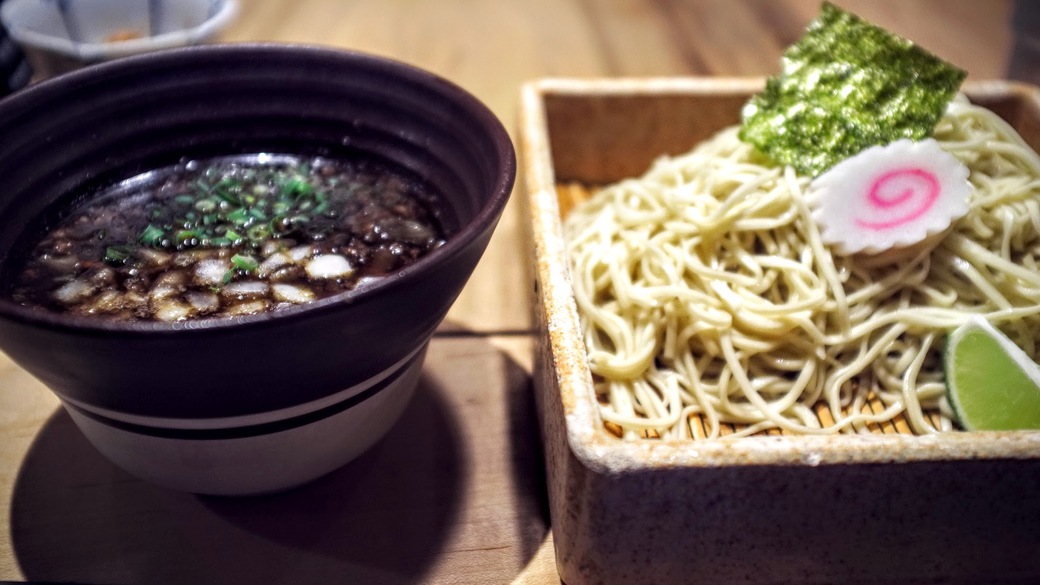
Rokurinsha: I wrote about this in my As Seen on TV post. Really enjoyed this place. Completely worth the wait (about 25 minutes in our case). There was food I enjoyed but knew I could get about the same in New York. This wasn’t on that list. The broth is exceptional. They only serve tsukemen. Most New York ramen places offer it but don’t specialize in it.

Gyogo: Most photogenic of the bunch is the burnt ramen from Gyogo in Kyoto. Their specialty is burnt ramen. I know some other ramen places do burnt leeks for flavor in their ramen, but Gyogo broth comes out nearly pitch black. It doesn’t taste as burned as I expected based on the color. Tasty though. We ordered some of their pork belly. Reminds me of the best parts of tocino without being overly sweet. Really worth trying.

Ten days in

I’m ten days in on this project and happy with the progress. There are some struggles, sometimes I’ve thought “What’s the point?” There’s always the reality that there might not be a point. Nothing at the end of the rainbow. But you just have to trust the process. Two crappy pages a day.

Then there are days where it’s a joy to write. Those days seem to come after a good night of sleep.

I do notice that I jump around a lot more when I’m typing compared to when I’m writing longhand. And that could be the charm of morning pages.

I’ve been writing pages in the morning. But I haven’t been doing my Morning PagesTM.

Tools

Here are some non-software tools I’ve been using for writing:

  • Composition notebook

  • Dr. Grip

  • MacBook

  • Chromebook

Here’s the software:

  • Google Keep

  • iA Writer

  • Focus@Will or random Spotify tracks found by searching “white noise” or “study music”1.

  • Google Docs

  1. I absolutely cannot write with music I would want to listen to. Sometimes I’ll write with a podcast on. It fills the gaps and might be good while free writing to queue things up. Like in high school I remember seeing a video of a rapper freestyling and being impressed that he could rhyme with random words the crowd would give him. Eventually I realized that the automated prompts can make it easier. Before trying to sit down and write, I was tinkering with Vue.js and… I was going to write the rest of the tech stack and actually it doesn’t matter exactly what I was using. But I was seeing if I could put together something that would let me write timed things based on my Amazon highlights as prompts. Then I got sort of too deep in the weeds and the tinkering became the thing, instead of the writing. So I was programming before and after work and happened to be programming at work at the time also. I got burnt out. I’m still curious about that idea though, because when I tried out a couple of the prototypes, I wrote a lot. They might be good for writing book notes. I tried something where it would give me 8 highlights from a book and then cycle through them. I wanted to see if I could do something where after the first sequence, it would discard the text from the bottom 4 (based on word count) and then you could add to the survivors, then discard half again until you were left with the one idea that you still have thoughts on. I also tried a thing where it would give me one highlight from two separate books and I would write about them together, forcing myself to think about the intersection. Some of the results were interesting. And I wanted to try something with timed writing that would just take you through different steps. There would be a pause button, but there would be no rewind button. You’d have a certain time to write an outline, then you’d have another time block divided up equally (or maybe you could specify what percent goes to what bullet point) and then you’d write each section out, then you’d get another round through, and then you’d be done. By the end, you’d have your first draft. It almost certainly wouldn’t be worth posting anywhere. But you’d have a good idea of if you have a good idea. All in, say, 20 minutes. I should try this out just using a timer. Maybe I can do that actually on the flight I’m currently on. With Bit Timer.

Happy Money

In Happy Money, Elizabeth Dunn and Michael Norton explain the best ways to spend money to increase happiness, based on behavioral science. I really enjoyed it and have been trying to apply the lessons ever since I read it. Here are some I enjoyed:

Research shows that experiences provide more happiness than material goods in part because experiences are more likely to make us feel connected to others.

I’ve tried putting this into practice as an adult. I really value travel, will gladly save up for a trip, and never regret it. That said, it’s nice having a down jacket and experiencing not freezing to death walking to work.

We are happy with things, until we find out there are better things available.

Most people recognize this. The harder part is turning those feelings off. There’s always more. Always. I still struggle with this. Sure, this down jacket is warm, but they look warmer in the Canada Goose. And if I get that, then I’ll want the one with OVO stitched on it. And so on.

People who spend more of their money on leisure report significantly greater satisfaction with their lives.

It’s important to be deliberate about leisure and relaxation. Just like it’s good to schedule time for relaxing, it’s good to set aside money for leisure. It’s good to step back from the day to day stress and consider why you’re putting yourself through it in the first place.

You can probably afford some kind of leisure right now. And you can take take it a step further than a trip to a movie by following these guidlines:

The experience brings you together with other people, fostering a sense of social connection.

The experience makes a memorable story that you’ll enjoy retelling for years to come.

The experience is tightly linked to your sense of who you are or want to be.

The experience provides a unique opportunity, eluding easy comparison with other available options.

Pick experiences that are: shared, memorable, personal, and unique. (“Well I’ll never have the chance to do this again” leads to spending $20 more on odd things the further away you are from your comfort zones.)

By consistently asking yourself how a purchase will affect your time, your dominant mind-set should shift, pushing you toward happier choices.

Growing up, I never ever ever thought I’d pay to have my laundry done. I never did a thorough cost comparison or anything like that. It didn’t seem to be stupid. It just never crossed my mind that I’d need to do it. Or want to.

Then I moved to New York. And I found a sublet in Chelsea. The building’s basement seemed like there was a mouse army setting up a siege on the cockroaches on the other side of the wall. It happened to be where the washing machines were. I wanted to stay far far away from that.

That’s a little extreme, but even now in an apartment where things aren’t a horror movie, I’ve continued using drop off service. For probably $10 more than it would cost do it myself, I can buy two hours of my life back.

Friday Links Issue 01

Inspired by Tim Ferris’s weekly newsletter of five things, I’ll start putting together lists of five links that interest me. Maybe bi-weekly. Because if I’m going to get to 100 posts in 100 days then there are going to have to be a few repeated topics. So here are some things I enjoyed reading1.

Also, I saved a couple bookmarks with Pocket. They’ll push to pinboard but I sort of forgot that I also have IFTTT pasting things to a Google Doc. That might help me put together a weekly link roundup.

Sorry, You Can’t Speed Read

that does not mean that you can somehow magically read parts of a page that you don’t look at, or process all the words in a superfast sequence.

I’ve always wanted to read faster. It’d be great to read, say, a book a day. More often, I’m hearing people say that they’re becoming okay not finishing books. Books sometimes appear over-anecdoted and fluffy because they are. Something about book sizes and airport book stores. Publishers want a certain book size and book stores do too. Mostly so that it looks like a book.

I can’t remember who I first heard it from, but someone pointed out that if you can get one great insight as a takeaway then the book is worth it. Related, someone else (unless they were the same person) said that for, say, $12 you can get years of someone’s knowledge distilled down. I’m feeling less guilty about skimming through parts of books2. Especially when I recognize the same study being referenced.

In (praise of) Process

But it’s also important to remember that small follow-throughs are what big follow-throughs depend on, and that a “finish line” is actually the last of a series. You have to cross many before you can cross the final one.

It’s about the journey. That’s my biggest takeaway from my time involved in TechStars. You can’t always focus on the end result. The journey is the interesting part. The fun part. It reminds me how important systems are. And focusing on the system and building a system that you enjoy going through. Or at least don’t hate going through. The system makes the journey more enjoyable and will get you to the payoff. I need to read this article probably.

In my effort to write daily, I’m seeing how consistency comes completely from the processes in place. If I have a good system for looking forward to the morning, then I’ll wake up when I want to ready to write. If I have a good system for writing then I’ll have a completed draft to edit. If I have a good system for editing and posting, then I’ll post consistently.

RIght now, I have systems in place for each of those steps but there’s a lot of room for improvement. In particular the editing and posting part. I get distracted by things like file directory organization.

Let’s sleep on it

Studies of human learning provide tantalizing evidence that sleep helps us retain new memories, but they don’t provide information about how it does so.

I recently read Sleep Smarter and enjoyed it. I thought I knew a good amount about sleep hygiene (I’ve got my blue blockers and a tub of Natural Calm in the kitchen), but there were a lot of new things and it was a good reminder of the things that I knew.

Some of the new things were that magnesium comes in a more effective cream form. And that working out at night isn’t great for sleep. I always thought that working out makes you tired and and, in turn, sleepier. But working out energizes you and can make it harder to sleep. Working out in the morning is great because it gives you energy in the morning and later at night helps signal when you should go to sleep. The book has citations. I’m citing the book.

There’s a chapter about meditation, which I really want to start practicing. I’ve done it maybe two or three times in my life. I listened to 10% Happier and thought it was one of the best audiobooks I’ve ever listened to. Then I didn’t meditate. Too many smart people meditate and there’s too much science backing it up to ignore it.

Paul Stamatiou: 10 years blogging3

I’ll be here pumping out one ridiculously-long article or photoset at a time, keeping my little corner of the Internet tidy and well-stocked.

I can’t remember how I started reading Paul Stamatiou’s blog. It was shortly before he stopped blogging regularly and started writing very long, in-depth articles. It’s great to read about his journey through the different stages that blogging has gone through. In particular, it’s a journey of both writing and tinkering on the blog itself. He made a huge transition from WordPress to Jekyll.

His photography site was a big inspiration behind a design sprint article I wrote. I saw his photography site and wanted to do something similar for my Spain trip. Then when I was putting out page layouts for photos, I thought what I had was clunky. And that’s when it hit me that it might be worth doing a design sprint to look at possible solutions.

I wrote about the sprint and that was a huge step in my career as a designer. It reminded me of the reach that’s possible through blogging. I wrote a few more things about design and blogged about them. Some were read a lot. Some were barely read at all. And writing this now reminds me of how valuable writing is. And tinkering.

In high school, I set up phpBB for my friends to mess around on. I also set up (gray matter), b2, and WordPress for me to mess around on. I didn’t make it quite to 10 years straight. I stopped after 5 or 6. But I’ve looked at that WordPress installation recently and it has 1500 posts.

Blogging is amazing and it seems to be having some kind of a revival, especially if we’re counting Medium.

Bill Simmons Breaks Free

Great profile on Bill Simmons in The Hollywood Reporter. I’ve read Bill Simmons since he was on ESPN Page 2. Not quite since he was on AOL. But for a long time. I went to a Book of Basketball signing. I forwarded his article about the Dooze to my crush during college and she said she loved it but didn’t understand all the sports references. I’ve listened to his podcasts from when it was kind of weird to have a podcast.

Something he would say (or maybe said one time in one podcast) is “You’ve gotta get your reps in”. He did that with his writing. Then with his podcast. He’s become an amazing interviewer. And now he’s got a TV show and the beginnings of a media empire. My brother and I took that as a mantra and say it to each other every so often in conversation. You’ve gotta get your reps in.

  1. I wrote most of this post on a plane. I’ve been trying out writing in 30 minute blocks and breaking those blocks into smaller intervals. I’m thinking of them as sort of writing sprints—until I think of a better name or find out a name for this type of thing already exists. For this post, I gathered 4 links to write about. Then I did 2 minutes for each topic, cycled back and did 4 minutes on each topic, then tried polishing things with the remaining 6 minutes.

  2. This reminds me of Effortless Reading, a book about reading. It talks about a book rotation: something you’ve read already, something new, something classic, a biography, fiction, non-fiction.

  3. I was trying to find this link and first searched for “10 years blogging”. It wasn’t the first result and it wasn’t even on the first page of results. I’ll try to go through a collection of those posts to see what some of the common takeaways are.

Japan Trip 04 of 10: As seen on TV

Aka Places we visited with better things you can watch online.

Osaka in general — No Reservations

We watched this episode on the flight to Japan. I wish they just had all Anthony Bourdain Japan-related episodes of various shows1.

We didn’t go to any specific place he visits on the show in Osaka. Actually, we did go to one of those places that has a bunch of battered and fried stuff. The episode was from 2006 and man I can’t believe it’s been 10 years.

We had similar food though. The battered and fried sticks mentioned above and also takoyaki. And we saw the street with the statue that people take pictures with.

Tsukemen place from Mind of a Chef — Mind of a Chef

Watch: Lucky Peach: Inside Tokyo Ramen Street’s Rokurinsha

There it is, right in the subway station. What isn’t shown on Mind of a Chef is that the shop is part of a line of restaurants in the station nicknamed ‘ramen row’. The wait was about 25 minutes and when you’re near the front you’re pulled out of line to order at the vending machine.

They’re very good about storing your luggage while you eat. The noodles are good and the broth is amazing. I said no to a bib because I believe in myself. Then I proceeded to cover my shirt with broth droplets.

After you finish the noodles, they add hot water to your tsukemen broth so you can have it like soup.

Also, while trying to find the Mind of a Chef clip of this, I saw that YouTube has a similar Lucky Peach episode. Then I remembered on the Bill Simmons podcast, David Chang mentions his foray into TV with Lucky Peach. They shot footage and then it was cut into some episodes of Mind of a Chef. The Lucky Peach episode is like watching the red band trailer of a PBS show. F-bombs abound.

Lawson — appeared on Parts Unknown, but in an Okinawa episode, which we didn’t visit

Anthony Bourdain is better with words than I am. On Lawson:

But there’s… one thing that still has an unholy grip on me. For no reason I can gather, it’s the convenience store, formerly of near-Akron, Ohio, that mutated into a massive Japanese chain. Behold, the wonder that is Lawson. What exactly about this place has its tentacles so deep into my heart and my soul?

I experienced it and love Lawson too. Growing up, we had a convenience store right off base. I think it was a 7-11 but I can’t remember for sure. What I do remember is that it was the pre-field-trip ritual. My mom would drive me there and we’d pick some snacks up. Usually that meant a rice ball and what then didn’t have a name but now we know as Uncrustables.

On this trip, we went to Lawson just about every day. 7-Eleven was another option, specifically when I needed an ATM. We would stock up on water for the hotel room at Lawson. Japan also has the game sort of locked on canned or bottled ice coffee.

I was also able to find Real Gold, though it comes in a Red Bull type can now instead of the small glass bottle that I imagine is what Elixir would be kept in if Final Fantasy were real life.

Also, me and my brother talk about how we used to always drink so much Real Gold when we were kids. And have guessed that it probably had a bunch of caffeine or nicotine or something so it never made it to the US market, even though it’s a Coca Cola product.

I remembered that David Chang has as segment in Lawson. I was scrolling through the Mind of a Chef episode descriptions, then I remembered it was from a No Reservations episode about Cook it Raw. He like, really loves Lawson.

  1. We watched a couple other food-related shows available on the flight. It reminded me how good a host Anthony Bourdain is. Watching the other shows was so cringe-y.

Seth Godin and Stephen King's pencil

Maybe this writing project will just turn into recapping podcasts I enjoyed. Who knows.

Either way, this post is about Seth Godin’s appearance on the Tim Ferris podcast. I mentioned it in an earlier post I wrote at Dunkin Donuts but couldn’t recall whose podcast it was on.

Along with the excerpt, here are some other things I enjoyed while trying to find1 his thoughts on writing rituals.

Bad ideas: Seth says daily blogging is one of his top 5 best business decisions, because it leaves a trail and he can continue doing it forever. Seth says he writes probably five posts a day, but stresses he has no ritual. Sometimes he’ll look at his queue and feels like he can write something better, so he does. But he says any good writer, if they’re being honest, will tell you they write a lot of bad things before getting to the good.

Write right: He writes right in Typepad, the blogging platform he uses and has been using for years. He shares a story about learning something from Chip Conley, who he went to business school with:

He got five of us together, and every Tuesday night we met in the anthropology department for four hours. And we brainstormed more than 5000 business ideas over the course of the first year of business school.

…He picked the anthropology department because he knew someone there and could get the conference room. He said, “This is the only place we will ever do this. And the reason is because when you walk into this room, you will associate this room with what we do here.

It only happened in that location and location is an important thing. The significance of writing in Typepad is not that it’s the best editor or anything, it’s that it’s the location where he goes and knows exactly what he’s there for and what he should be doing. I’m trying to find my location2.

Stephen King’s pencil: Tim asks about Seth’s writing ritual. “What time? Do you write in the morning?”

It’s not interesting to me to talk about how I do it because there’s no correlation that I have ever encountered between how writers write and how good their work is. So they should move on because it doesn’t matter.

I will now write ten more posts about how I write.

My dream is to be considered a good writer so I can tell people that I write in cafes. And I drown out the cafe sounds with headphones playing scientifically focus-approved cafe sounds. And that I use a Dr. Grip.

  1. I tried listening at 3x but have found that 2x is good for finding things and 1.5x is good for listening.

  2. I’m currently at one of the coffee shops around the corner. The coffee is better than Dunkin’ Donuts (possibly), but it feels weird being the only one sitting in the shop. It seems like they know every customer and have conversations with everyone that walks in. There are regulars. Which is what I’d like from a coffee shop. And exactly what I don’t want for a writing location. They look over once in a while. Are they wondering what I’m writing about? I’m certain the people at Dunkin’ Donuts don’t wonder about me at all. It’s great.

Japan Trip 03 of 10: Airplane food

I read Andy Greenwald’s food diary and it reminded me that 1.) I don’t write as well as he does but 2.) I can try to eat as well as he does. (I’d love to capture a night out as well as he writes about attending a wedding and the aftermath.)

I think you’re supposed to take notes. Which I didn’t do. But I did take pictures. So I’ll have to just go off those when my memory fails me. Which is right about now.

The first meal we had was at a yakitori place a couple blocks from our hotel. Wait, I’ll get back to that. I think the first thing really was the airplane food.

The thing about airplane food

Japan Airlines served food three times on the flight. A 14 hour flight is longer than it sounds. I mean, I did NY to JFK flight a week before and that’s six hours and that already feels long. Once you hit six hours and see that there’s still a full day of work worth of time you start realizing just how long the flight is. Then you think of how long a full day of work is and that even with work to do there’s still time to stare at the clock.

But this is about food. They start with full lunch service. I picked the pork katsu curry. Which I mean sort of says it all. It’s delicious. And it’s on a plane. Right now I’m fine not knowing the adjectives to describe fancier food. This isn’t that. [I don’t know that something breaded and deep fried can ever deserve all the adjectives that I don’t have knowledge of.] Basically, its pork katsu curry on a plane. If you’ve had the two separately, you can imagine them together.

I’ve fully enjoyed housing three bags of popcorners on domestic flights. So you know this was better. And you know the basic palette I possess.

The real enjoyment is in the bento setup. In three other boxes, there’s a potato salad with smoked salmon, mixed fruit, and tofu with pickled vegetables. And a salad. Then they come around with tiny cups of Haagen Dazs.

That set the bar high. Then they teleported me in from 3rd grade to put together a ham sandwich for the second meal.

After watching Concussion, various episodes of No Reservations and other worse travel shows, sleeping, reading a book about writing, writing a little bit, and watching half of The Martian, breakfast came. Shrimp congee, yogurt, crackers, and fruit.

Now for a bait and switch. If you came to read about yakitori, this post is getting too long so I’m separating it into its own post. I’ll update this link when that’s written.

Japan Trip 02 of 10: DIY Mos Burger

I wanted to write ten posts about Japan. That would hopefully be more focused than the initial random thoughts post. Each of the ten posts will probably have one picture and some thoughts related to that picture. We’ll see how that goes.

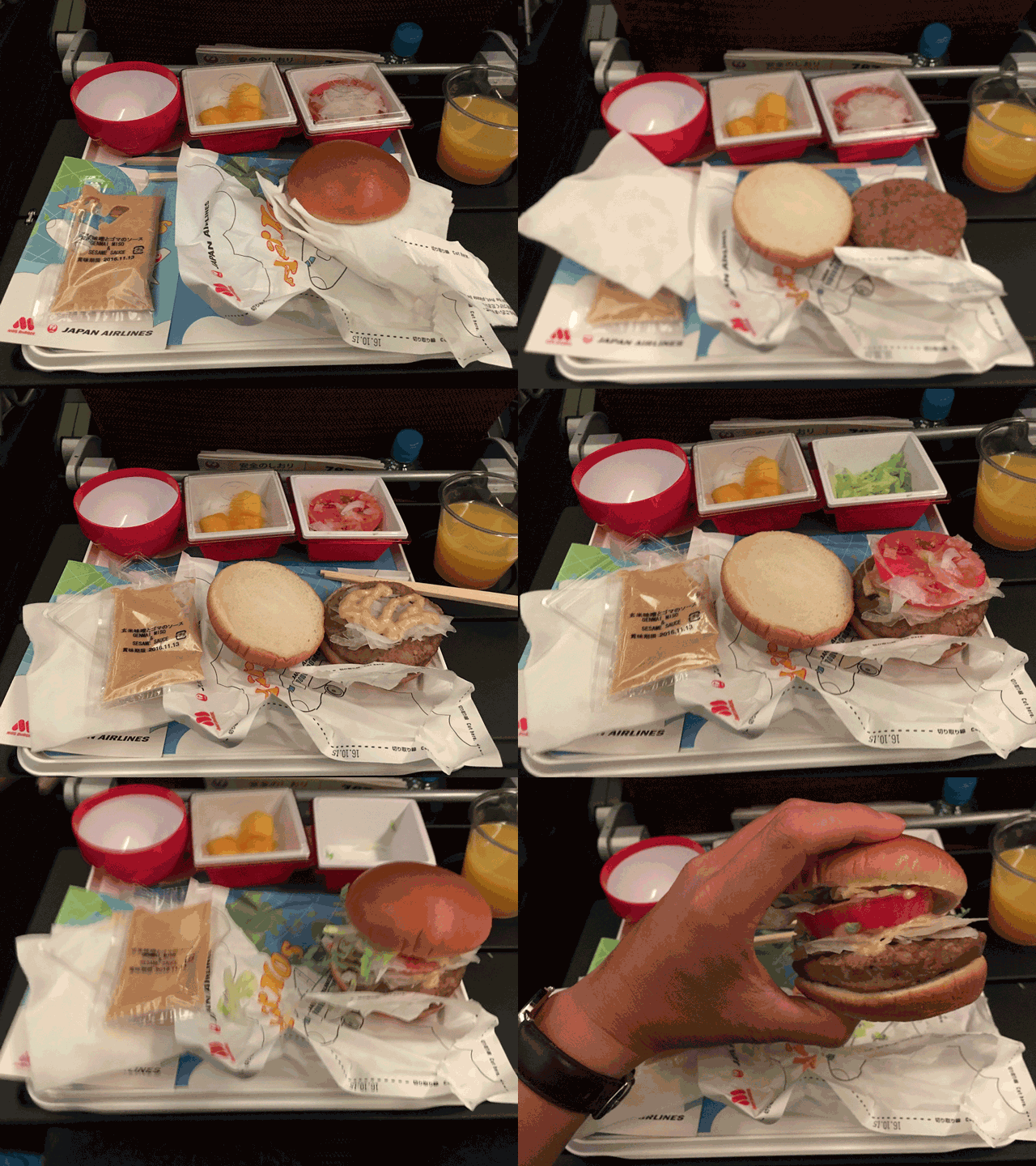
Here’s a burger from the Japan Airlines flight.

"Mos Burger"

It’s a meal from Mos Burger that you assemble on your own. I wish I took a picture of the instructions sheet. Before Japan, I heard that Mos Burger is known for their rice and veggie burgers. I wasn’t too keen on trying it, because what I think is a pretty open mind for food shuts down when it comes to fake meat products. And we didn’t stop in when we passed by them on the street.

This was one of the meals on the flight back. And it was delicious so now I wish we tried out the real thing while in Japan. There’s always next time.

At Dunkin Donuts

"Dunkin Donuts"

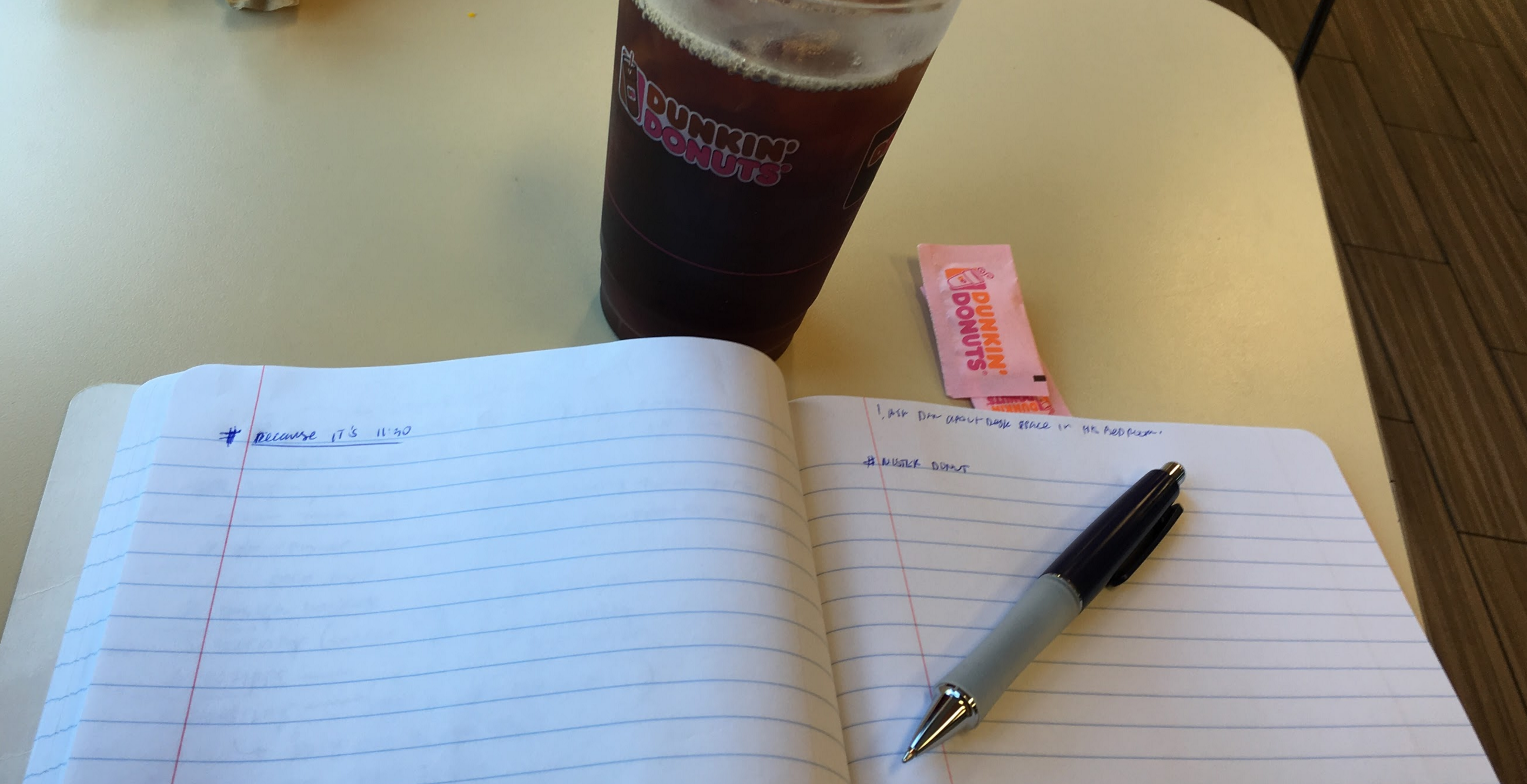
I’m writing this longhand at Dunkin Donuts. I’m still a little jetlagged. Actually I’m probably a lot jet lagged. But I’m also resigned to the fact that I’m flying back to Pacific Time (Seattle) in a few days and it might be better to just stay adjusted to this current pattern.

I was just going to get a drink but on the way out I grabbed my notebook. I thought it might be good to try writing at Dunkin Donuts. Bill Simmons has mentioned that he wrote a lot of his old posts longhand at Dunkin Donuts. And he’s known for very high word counts so he was spending good time at Dunkin Donuts. Why not try it out?

Then I was immediately reminded of a podcast Seth Godin appeared on1. Someone asks what his routine is for writing daily. He says something along the lines of: you can ask the best writer in the world what pen they use but that’s beside the point. The best thing for someone else won’t be the best thing for you. (He does say he writes right in Typepad.)

That said, I’m trying to figure out what exactly works best for me. Which means trying out a few different things. So longhand at Dunkin Donuts it is. For this morning at least.

There are some good things. Being at a coffee place keeps me mindful that I came to write. Where at home I’m mindful of all the other things I could be eating, watching, or cleaning. There are a few other coffee shops in the immediate radius of my apartment. Good wifi isn’t necessary (if I’m continuing with the longhand experiment), so that adds more flexibility2.

I think I can try writing longhand for an hour and then type and edit for an hour. Though I know two hour blocks are a little unrealistic to plan for. Maybe 45 minutes and 45 minutes3? Also, I had plans to write about Japan this morning but now I’ve mostly written about writing. I’ll continue the Japan posts tomorrow. At this rate, I’ll pretty much only write about the writing itself. Which might not be entirely a bad thing. Just mostly bad.

While lying in bed this morning I was thinking about how I could go back to sleep. I did the exact worst thing and checked my phone. I had some tabs still open from last night to, again, some Seth Godin posts and James Clear posts. (Both current inspirations for building up a habit of publishing consistently.)

One of them had a Lorne Michaels quote from a Harvard Business Review interview:

What’s the secret to being creative on a deadline?

Knowing the deadline is real. That focuses people’s thinking. We don’t go on because we’re ready. We go on because it’s 11:30. There’s no getting out of it.

I don’t post because it’s ready. I post because it’s _______. I need to create a deadline for myself so that I can fill in that blank. Something important from that quote is knowing the deadline is real.

Creativity can flourish with constraints. But it’s better if those constraints are real. I can give myself all sorts of fake deadlines. And I have. But nobody is keeping me accountable. I don’t think I can get an NBC show to write for so I’ll have to do some thinking about how to create more real deadlines. I might try emailing drafts of posts to a friend every day.

Until I have anything resembling a readership, having one single person expecting this might be real enough.

  1. I realized in earlier posts that looking up excerpts and links adds a _lot_ of friction when initially writing. Maybe I can just have a list of links and excerpts to look up later and have a weekly round up? That’s a little lazy but if it’s the difference between posting daily and not, then I’ll go with it.

  2. “coffee wifi” is one of my favorite suggested Yelp searches. Lots of places in New York don’t have wifi or have no-laptop seats and things like that.

  3. Update after typing this up: I set a timer for 25 minutes and was able to type the page up with a few edits. Maybe I can get it to something like 40 minutes longhand and 20 minutes typing. Also, this post length represents two longhand pages. Good to know.

Japan Trip 01 of 10: Five quick thoughts

I’m back from my trip to Japan. There’s a lot to process — including literally processing photos. Well, the 2016 sense of “processing”1 meaning toggling things in Lightroom but wishing I just had Instagram filters instead.

Anyway, here are five unsorted thoughts2 about the trip to Japan3.

  • Man, the food. It’s so good. I’d say especially on the lower end. Having good bowls of ramen, udon, and curry around for $6 or $7 was great.

  • I’m realizing I don’t know enough about sushi to say much more than that I enjoyed it there. I’ve enjoyed it in New York and Seattle and plenty of other places and will continue to. I’ve heard and read that sushi is about the rice (aka I’ve watched Jiro Dreams of Sushi like everyone else). But, I mean, it still seems like it’s about the fish.

  • Cash only and no tipping. I like it. Get a debit card that refunds any ATM charges and then withdraw at 7-11s.

  • Convenience stores and vending machines really really are everywhere.

  • A lot of what I liked reminded me to appreciate living in New York. We have nearly the same amount of convenience.

  • Bathrooms are everywhere4. If I’m walking around New York, I know that finding a bathroom won’t always be easy. And any of the common choices (read: Starbucks) will have a line. With all the drinks to try from convenience stores and vending machines, it was always good knowing a restroom was nearby.

  1. But not the 2016 sense of *literally*. Is this how *nonplussed* changed its definition?

  2. Probably inspired by the AV Club Game of Thrones recaps with extra thoughts at the end of longer articles. Except I’m starting with the random thoughts and can’t promise anything well thought out.

  3. Was scrolling through the autocomplete in Webstorm for list-style-type trying to reset to the default dot. Then I saw hiragana. I’ll take it. But then I realized it’d change things globally if I Update it in the CSS file. Then I tried putting \

  4. I’m an aisle seat guy when booking plane tickets.

A Writing Idea

Last night I got back from Google I/O. It’s the beginning of a month of travel. I have a good number of flights scheduled for May and June. It hit me that this would be a lot of time on a plane.12.

Vegas: 11 hours total

Bay Area: 11 hours total

Japan: 27 hours total

Seattle: 11 hours total

60 hours on a plane in a month. 1.5 weeks of work. Or one workaholic week. That’s the first time I’ve actually added it up. Geez.

Okay, so I’d like to write during some of that. Well, I did write for a portion of the different trips that are complete. Mostly in a composition notebook. I’ve started doing morning pages. Or some version of it. Though I can’t say I’ve been doing them as prescribed. It’s more just getting into longhand writing.

Headings to stay organized

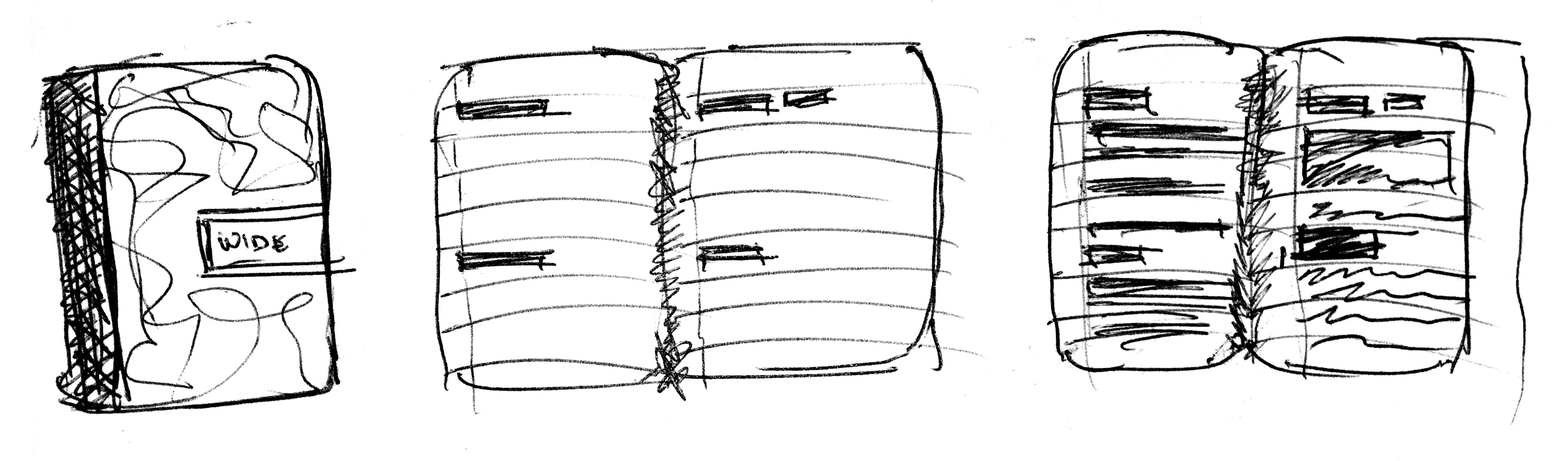
Now I’m rambling. I tried something on the flight back from SFO to JFK, where I open to a blank page and write 4 headings.

Then I fill those in.

"Composition"

I did a few rounds of this on the flight and enjoyed it.

  • Helps get me started just writing. Somewhat easy to get to two crappy pages longhand.

  • Helps force me to stop writing about that topic and move to the next.

  • Gives me a good sense of whether there’s more to that idea that I can expand on.

By the end of the small section I know if I’m trying to cram a few more words into the final lines, there’s probably more I want to say. If I’m struggling to fill half a page, then hey maybe that’s not really going to work well to finish a post.

Then I turn to the next blank page and try to expand on whatever topic of the four I found most interesting.

That writing idea the title of this page is hinting at

One of the sessions got me thinking about what I’ll be writing about if I’m shooting for 100 days of writing. The idea would be to try and have themes for the week.

I also wrote this tagline:

I’m writing about whatever to learn what I like writing about.

I’ve had a personal blog with 1500+ posts. I’ve written some articles about design. I’ve been paid to write before, possibly in the least sexy way possible: at a technical writing internship writing material for the DB2 for z/OS introduction manual.

I want to get a better sense of what I really enjoy writing about most. I thought it’d be good to focus on themes. First I was thinking I’d focus on themes for a month at a time, but that was a little too long.

I’m going to try focusing two weeks at a time on each theme. I wrote a preliminary list of ten themes. Each theme will have 10 posts each then I’ll move on. Here’s that preliminary list:

  1. Japan: I have that Japan trip that I mentioned. I’ll approach this sort of like a travel/photography blog.

  2. Framer Tutorials: Framer has grown a lot since I was using it regularly. I’d like to learn about what’s possible with the latest version and give back to one of the best online communities I’ve experienced.

  3. New York: Again, approached like a travel/photography blog. I live here and want to get back to exploring it. New York, like any other place, is different for different people. I’d like to share what it’s been like for me the past three-isa years. And write about some memories. I regret that I didn’t write more about New York when everything was completely new to me. But I recognize that there’s no better time to start writing than now. Three years isn’t thirty years. There are still plenty of things that are new to me.

  4. Design dashes: I enjoyed writing about design sprints, but they’re better as a team activity. I’d like to just compress that process into a really small design dash. Cycles of sketching exercises to get some sense of what an idea might look like. And maybe I’ll take one of them further to a prototype as a follow-up.

  5. Learning: I’ve read a lot about learning in the past year or two. I’d like to apply that to drawing. I eventually would like to be good at drawing so I’ll write about the process.

  6. Wrestling: Somehow I’ve gotten back into following professional wrestling. I’ll explain how and write about some of my favorite childhood memories involving WCW and the WWF. Like Yokozuna on a forklift.

  7. Book notes: I have a backlog of books that I want to write about.

  8. UX career advice: I think I can share some insight here on how to go about preparing portfolios, finding the right type of role, side projects, interviewing, and other things like that.

  9. Writing: I think this post and the previous post could be lumped in here. Just general thoughts on writing. Probably will be self-indulgent and meta. I’ll try out different systems and talk about what worked for me and what didn’t.

  10. Scripts, comedy: Very tentative. Making someone laugh through words is difficult. It takes work. I’ll try to read some books on writing comedy and apply what I learn and see if I can write a joke or two. Along the lines of some of the old Grantland staff and Chase Buckley’s The Future is Near.

Japan will be first, but I don’t intend to write them in this order. And I’m sure some themes will change as I go along. It’s all an experiment so I’m sure I’ll iterate as I go along. Maybe 10 posts is too many for certain themes. Maybe a theme clearly isn’t fun to write.

As always, we’ll see.

  1. Right now the meta stuff will be footnote-ish. Just got an idea: need to figure out a workflow to upload an image quickly to my domain so that I can remove the friction from including images when writing in iA Writer. I’m not the first person with this idea. Or the thousandth. One lash for every five minutes I spend tinkering with the site instead of writing. Well I’d have 3 or 4 lashes today.

  2. Okay just had another idea, to actually use footnotes with anchor tags. That seems to work okay. I find footnotes fun to read and write. This might be a crutch and help move me toward being a lazy writer. But I think the offset is that it’s fun to write them. Another few lashes to fix the styling on footnotes and also to learn how to write them in Markdown.

Two crappy pages

From a Men’s Health interview with Kobe Bryant in 2007:

MF: Do you have any training tips, aside from Olympic lifts, that you’d recommend to younger basketball players?*

Kobe: The thing that I tell them all the time is consistency. If they watch me train, running on a track, it doesn’t look like I’m over-exerting myself. It’s a consistency with which you do it, in other words, it’s an every-day-thing. You have a program, and a schedule, and you have to abide by that, religiously. You just stick to it, and it’s the consistency that pays off.*

I’ve now found the motivation to sit in a chair and type for an hour.

What

I want to publish one page per day.

Why?

I’ve re-read parts of On Writing a few weeks ago. Stephen King has plenty of good advice about writing, including this succinct tip:

If you want to be a writer, you must do two things above all others: read a lot and write a lot.

I’ve been reading about one book per week this year. It’s not earth-shattering but it’s a good pace. What I haven’t been doing is writing.

Who

Here are a few people who came to mind as far as inspiring me to write today, this week, and this year.

Today: On this particular day, Tim Ferris posted a podcast episode with Chase Jarvis. I also finished reading Anything You Want by Derek Sivers.

This week: I saw Robert Mion’s 100 Days of Framer, inspired by Sam Lu’s 100 Days of Swift.

I tried doing 30 prototypes in 30 days (mostly with Framer). I did about 22 days before stopping, but still learned a lot. One of the more meta things I learned is that sharing the prototypes daily meant writing about the prototypes daily. The writing itself could double the time commitment.

After seeing Robert and Sam’s prototyping projects, I was thinking of what kind of project I could try out. Then I realized that writing alone might be enough to pursue. So I’m going to try that. 100 Days of Writing. I don’t know about what. I’m not going to decide on what to write beforehand. I think I’ll settle into similar themes.

This year: Earlier this year, I read Julie Zhuo’s *Write in 2016* and decided it’d be good to try writing in 2016. I even sent out a couple posts through my newsletter to get some reps in. Then I stopped. I’m still really inspired reading Julie say that writing changed her life. So I’m going to give it another go, starting now.

I subscribe to Tobias van Schneider’s weekly mailing list and he just finished a year of newsletter issues without missing a week. He knew it wouldn’t be perfect but knew it was important to get started.

Seth Godin still posts daily. There’s value in posting consistently.

Where

Above, I mentioned the Tim Ferris podcast. Tim and Chase talk about optimizing creative output. Chase was one Tim’s first guests, before the podcast unexpectedly became his main creative endeavor.

Early on he made it a point to take the friction out of his podcasts. He mentions a lot of people make three podcasts and then quit. And a lot of times it’s because editing becomes too big an effort. He decided his podcast would be long-form with minimal editing.

People also get overwhelmed with audio quality. Tim thought about the contexts that people listen to podcasts in. The most important things are making sure the audio is loud enough and mono. It’s usually two people talking so there’s no reason to make it harder than than it needs to be?

I’ll be posting things on franciscortez.com for now. I’ve written things on designsprints.com but it always feels odd when I post things that aren’t completely design related. I won’t make it harder than it needs to be, and I feel like there will be less friction posting things on my personal site right now.

When

I’ll try posting daily. Tim Ferris mentions that one of his earlier goals was to write two bad pages each day:

I was told at one point, “Your goal should be two crappy pages per day.” That’s it. If you’ve hit two crappy pages each day, even if you’ve never used them, you’ve succeeded for the day. Alleviating that performance anxiety about putting down ten pages of good material, which inevitably, I think, you’re going to fail two or three times each week, allows you to overshoot that goal. And continually succeed. And sort of build that confidence and momentum.

He references BJ Fogg’s idea of tiny habits like flossing your two front teeth. That’s usually all the momentum you need to floss the rest of your teeth.

How

“Wake up earlier.” — Tim Ferris

Guess which episode that’s from. Yes, I wrote this mostly as a recap of his interview with Chase Jarvis. Things got away from me a bit. They mention Khaled Hosseini, who wrote The Kite Runner while he had a full time job as a doctor. I’m being far less ambitious.

Publishing every day is pretty simple once you have WordPress or some other system set up. Simple in the sense that you can write a couple words and hit ‘Publish’. I’ll try to avoid cop-out single sentence posts saying things like “Posting to keep the streak going.”

I’ll say it now: I won’t post for 100 days straight. I have a lot of travel coming up. Including a trip to Japan. I want to be present during that. How can I take selfies, search for Yelp reviews, and look at the country through the iOS camera if I’m writing?

I’ll do my best to complete 100 posts in 100 days by writing extra posts in longer sessions.

Here’s to day 1.

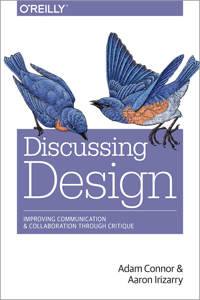
Discussing Design

discussing-design

Note: This was originally posted on Design Sprints.

Communication is an important soft skill for product designers. In Discussing Design, Adam Connor and Aaron Irizary discuss the importance of critique in the design process.

A lot of communication within a design team comes in the form of critique. Adam and Aaron explain how to deliver and receive critique. (For communicating with PMs and engineering, I’ve really enjoyed another book: Articulating Design Decisions by Tom Greever.)
You can improve as a designer by delivering useful feedback to other designers. The same way teaching is a great way to solidify knowledge, delivering useful feedback requires you to think about different aspects of design and organize your thoughts.

What kind of critique is useful? Let’s take a look.

Critical thinking

I love Dribbble — it’s a positive place on the internet, and that’s a great thing. However, it’s not the best place to look for effective critique. Adam and Aaron’s three key elements to effective critique can help explain why:

“1.) It identifies a specific aspect of the idea or a decision in the design being analyzed.”

People complain that Dribbble feedback isn’t useful for finding flaws and improving design. “Good job” and “Great work!” aren’t specific at all.

“2.) It relates that aspect or decision to an objective or best practice.”

A lot of time, the work shared on Dribbble is a detail shot or some other form of a very small part of a larger project. There isn’t enough shown and sometimes there isn’t an objective at all to relate critique to.

You should be basing design decisions on objectives and best practice. When starting out, it’s good to lean on best practices to build out something that mostly works. It’s okay to stray away from best practices if your solution works better for a project objectives.

When critiquing, think about design aspects that are going against objectives or best practices. Otherwise you might simply be saying that your arbitrary choice is better than their arbitrary choice.

“3.) It describes how and why the aspect or decision work to support or not support the objective or best practice.”

Good critique requires effort on both ends. Presenting something while also explaining all the factors involved — constraints, timelines, background info — takes effort. Parsing this info and fully understanding the problem being designed for also takes effort.

Combined, this is probably why there’s not a hugely popular community for useful design feedback. If people took the time to do that on Dribbble, it wouldn’t be a light, fun place to go to. It wouldn’t be Dribbble.

Feedback that doesn’t nail these three elements might fit into another category. Let’s take a look.

Reactions and directions

Discussing Design describes three types of feedback: reaction-based, direction-based, and critique.

Reaction-based feedback includes the quick emotional responses you’ll often get when showing something for the first time. “Nope.” and “Good work!” are examples. You can tell how useful feedback is by asking the following questions:

“…are the people from whom you’ve asked for feedback reflective of your design’s actual audience? Are they looking at it the same way your potential users would? Does this reaction divulge anything specific about any of the design decisions you’ve made so far or their effectiveness?”

With reaction-based feedback, the answer to these questions is usually “no”.

If you leave a meeting with a list of changes, that’s direction-based feedback. It answers “yes” to some of the above questions, so there’s a time and place for it. But it can be an issue:

“Similar to reaction-based feedback, direction-based feedback without any explanation indicates nothing about the effectiveness of your decisions in meeting the design’s objectives. Sure, if the person giving you feedback is the one who will ultimately approve the design, she might supply you with a to-do list that you could act upon to get her approval, but getting that approval and creating an effective design are not necessarily the same things.”

Sometimes you might hit the three elements of critique and it still won’t be useful. How come? The timing might be off.

Critique Timing

Connor and Irizarry provide a good rule of thumb for when to critique solutions:

“For example, the best time to critique a solution is after it is 20 percent baked but before it’s 80 percent baked.”

When you’re in that 20%–80% sweet spot, it’s good to receive critique often. Discussing Design refers to “Dailies” done at Pixar. I went to the bookshelf (read: searched my Kindle) to check out what Edwin Catmull had to say about Pixar Dailies in Creativity Inc.:

“The first step is to teach them that everyone at Pixar shows incomplete work, and everyone is free to make suggestions. When they realize this, the embarrassment goes away—and when the embarrassment goes away, people become more creative. By making the struggles to solve the problems safe to discuss, then everyone learns from—and inspires—one another. The whole activity becomes socially rewarding and productive. To participate fully each morning requires empathy, clarity, generosity, and the ability to listen. Dailies are designed to promote everyone’s ability to be open to others, in the recognition that individual creativity is magnified by the people around you. The result: We see more clearly.”

Engineering won’t have time to incorporate design improvements after the 20%–80% sweet spot. Before the sweet spot, it’s better to continue creating without stopping for critique. How come? Each task requires a different mindset.

Mindsets: Creative vs. Analytical

Many writers write and edit separately because they require different mindsets. One mindset is creative and the other is analytical. Adam and Aaron discuss how these different mindsets apply in design and critique:

“When designing something, the brain operates as a toggle, switching between creative thinking — where individuals are generating ideas or assembling parts of ideas — and analytical thinking — where they are determining whether what they’ve designed so far is in line with what they are trying to achieve. Experienced designers, artists, engineers, and others have learned how to be deliberate in controlling when to make this toggle, periodically pausing their creative work to take a step back and critique what they have so far.”

Discussing Design lays out some techniques to facilitate effective critiques.

Design Studio

In the Google Ventures design sprint methodology, diverging and deciding are separate steps.

Teams generate as many ideas as possible with mind maps and Crazy 8s. At the end, participants select the best ideas based on the objectives.

Discussing Design describes a similar technique called Design Studio. They mention Todd Zaki Warfel adapting the technique from other design disciplines to the digital world. Back to the bookshelf, here’s an excerpt from Warfel’s book, Prototyping: A Practitioner’s Guide:

“In the world of architecture and industrial design, a design studio is a process, not just a physical place. This process is taught in every respectable architecture and industrial design program. You’ll be hard pressed to find a design studio class in computer science.”

“In studio classes, you design or prototype and present to your peers. Your peers critique your work, highlighting the strengths and areas that still need some work.”

Adam and Aaron describe a three-charrette activity to quickly go through multiple rounds of design and critique. Like Crazy 8s, it involves timed sketching. Their activity goes like this:

  • 8 minutes for six sketches of different concepts
  • 8 minutes for iterating on their strongest idea
  • 20 minutes as a team to sketch one idea

Sum Up

Here are some key takeaways from Discussing Design:

  • Quality: Objectives and best practices are your guiding light for effective critique.
  • Timing: Critique is most useful when it takes place during the 20%–80% sweet spot.
  • Mindsets: Creation and critique require different mindsets and should be separated.

Embracing critique and following these principles will help you be more effective in delivering and receiving critique.